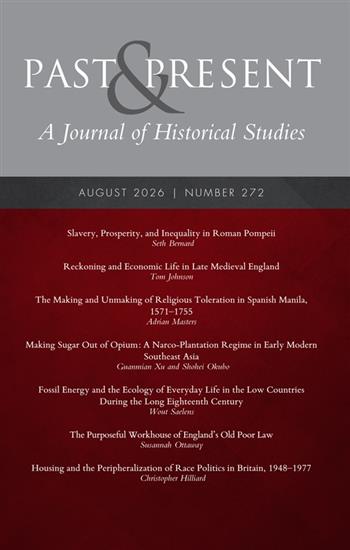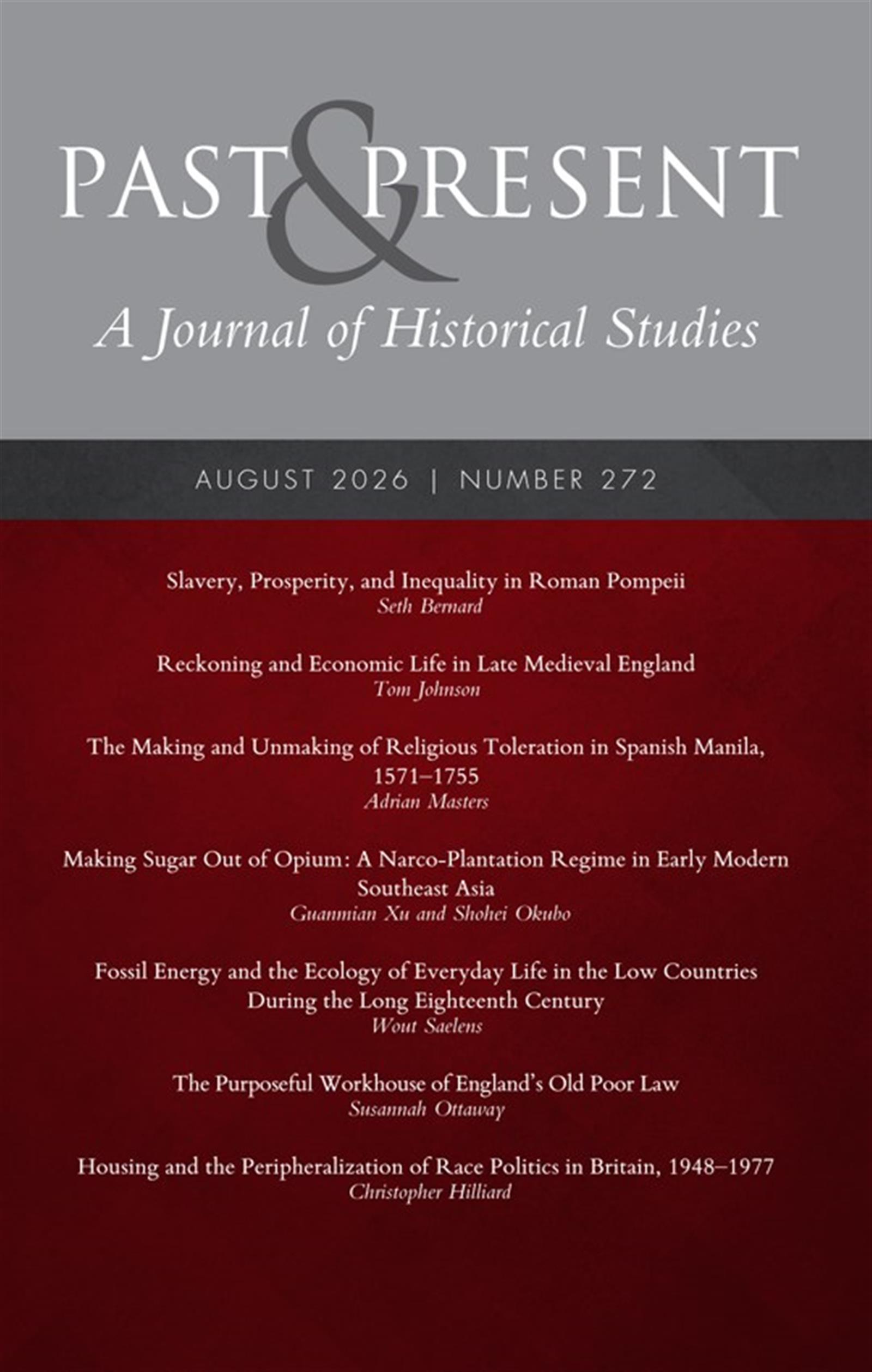



Slavery, Prosperity, and Inequality in Roman Pompeii*
Recent economic historical analyses suggest that the prosperity of ancient Pompeii was closely linked to the exploitation of enslaved people. Statistical models illustrate the significant economic role of slave labour within the city and reveal the close relationship between wealth accumulation, social inequality and the structures of the Roman economy.
Making sugar out of opium: A narco-plantation regime in early modern Southeast Asia
The study investigates the emergence of plantation systems in early modern Southeast Asia and examines how opium consumption functioned as a mechanism of labour control and exploitation. Using sugar plantations in the Batavia (Jakarta) region as a case study, it identifies alternative forms of coerced labour beyond the framework of Atlantic slavery and expands the understanding of global plantation economies.
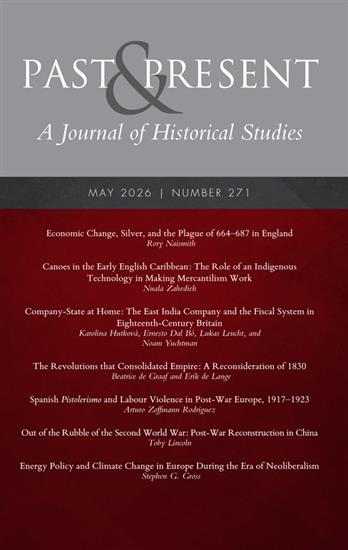
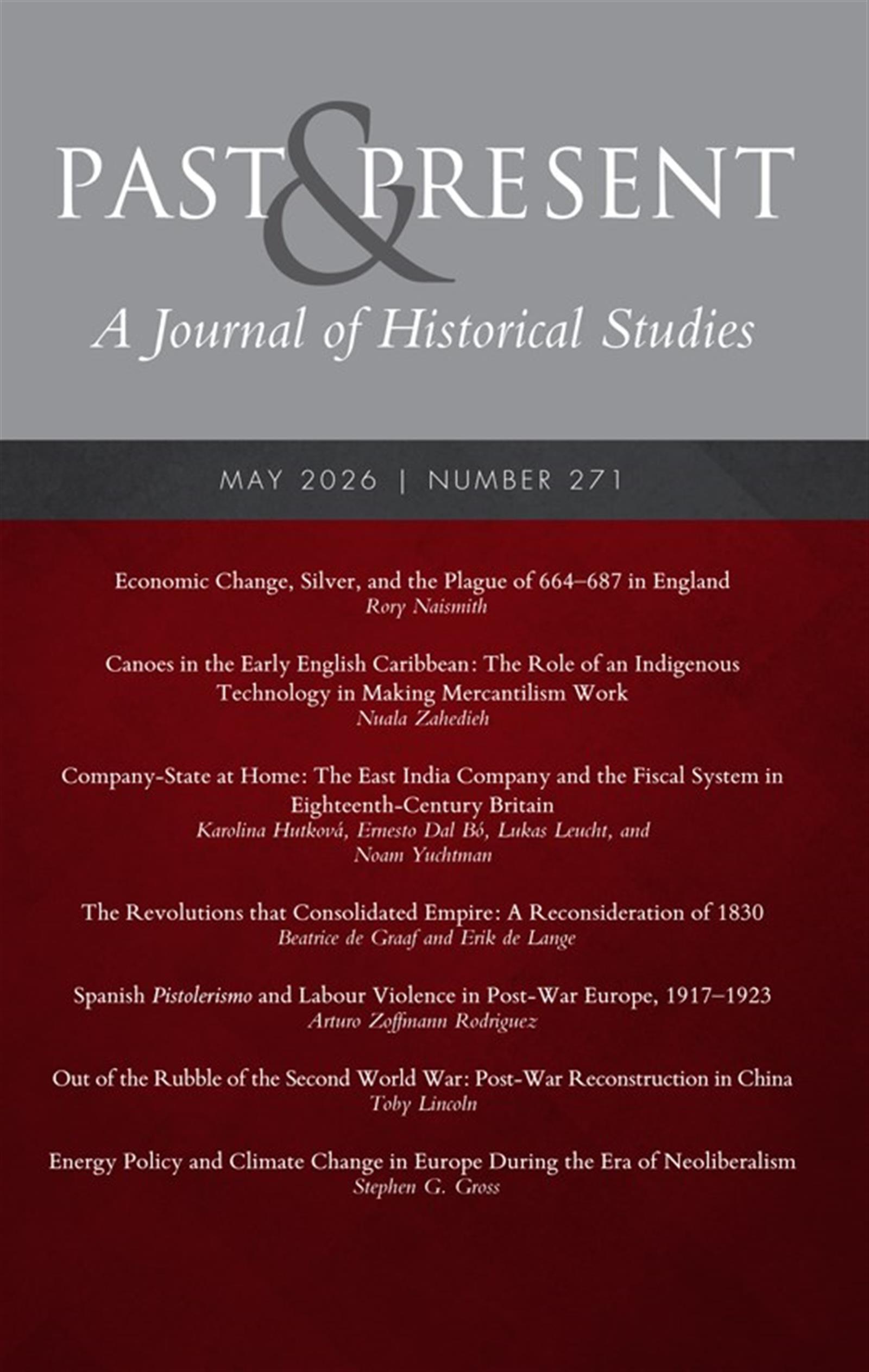
Out of the Rubble of the Second World War: Post-War Reconstruction in China*
Late 1940s China deserves study as a post-war reconstruction society, not merely as a prelude to revolution. Cities like Changsha, Xuzhou, and Zhengzhou suffered destruction comparable to European and Japanese cities. Nationalists faced criminality and governance failures common across the post-war world. What looks like failure was, in fact, the global norm after the Second World War.
Lordship in the Later Middle Ages: A Round Table Discussion
Three articles on late medieval lordship published in Past and Present in 2023 — by Liddy, Sharp, and Buylaert et al. — formed the basis of a roundtable held on 17 June 2024 at King's College London. Contributors discussed what lords extracted from and offered to local societies, identifying shared themes across their differing approaches to seigneurial power and its social and economic impact.
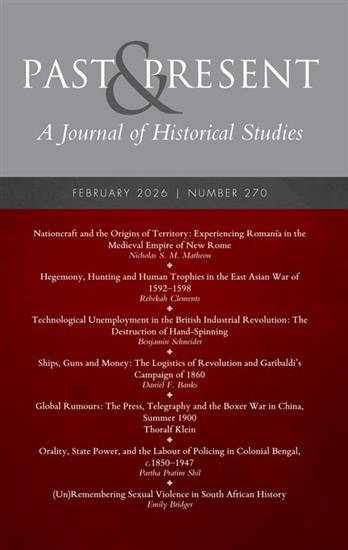
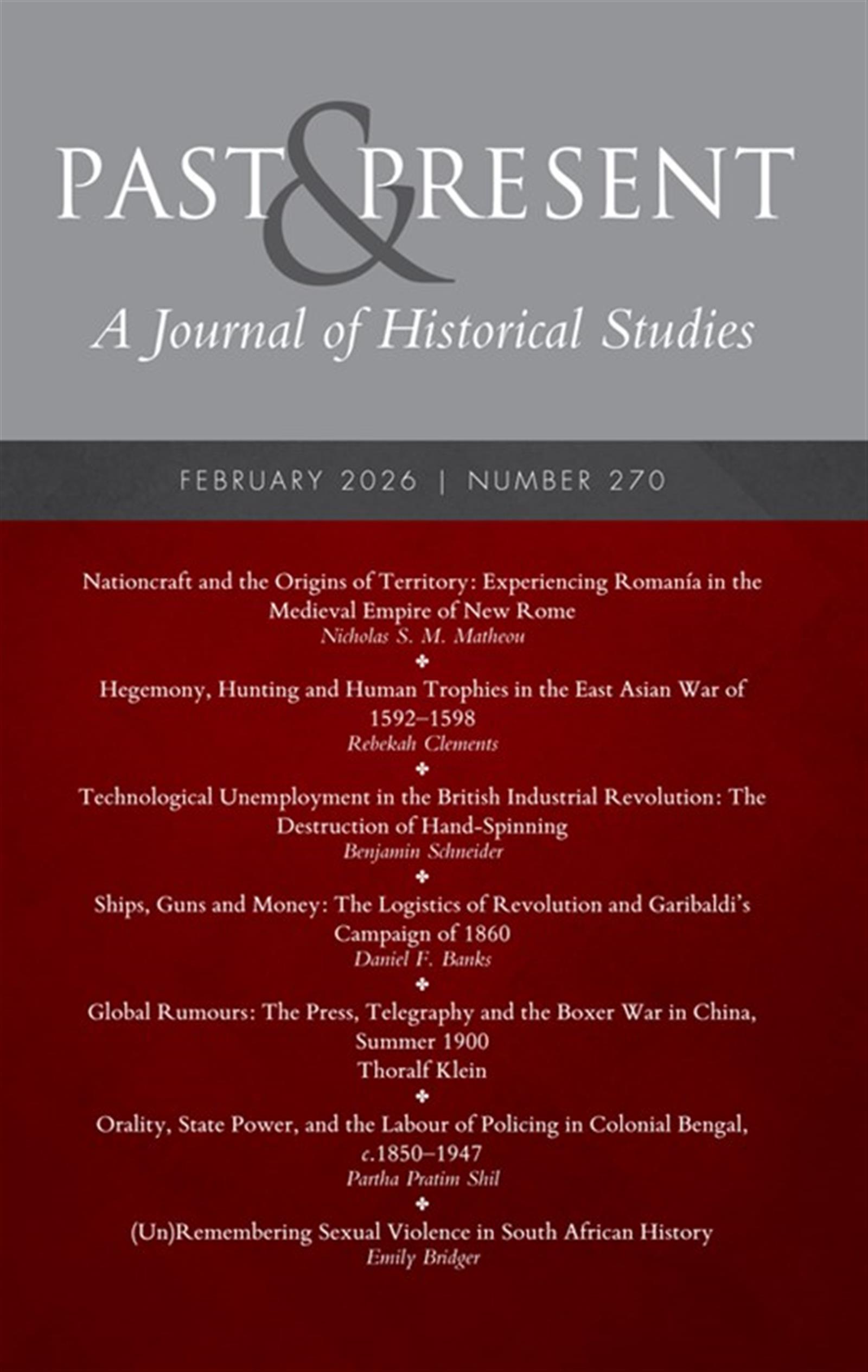
(Un)Remembering Sexual Violence in South African History
In South Africa, gender-based and sexual violence has deep colonial and apartheid roots. Yet Black women* in their sixties to eighties often recall apartheid as free of rape, framing sexual violence as a “nowadays” problem. Explanations include family and police silencing, naming rape as “force”, sidelining intra-communal violence in dominant narratives, and present-day “rape crisis” discourse that fuels historical amnesia and nostalgia.
The Promises and Perils of Periodization in Global History: Lessons from the Inter-War Era
This article considers the role of periodization in global history through the lens of the inter-war era. It argues that periodizations are not neutral containers but contestable claims that have privileged Eurocentric modern eras, and suggests polycentric, polytemporal models that align multiple global periodizations to reveal diverse historical actors, dynamics and temporal rhythms.
Past & Present ist eine bedeutende britische geschichtswissenschaftliche Zeitschrift mit Schwerpunkt auf Sozialgeschichte. Sie wurde 1952 gegründet und gilt als eine der führenden Zeitschriften für innovative, sozialhistorische Forschung weltweit. Sie veröffentlicht wissenschaftliche Artikel, Debatten und Rezensionen, die sich sich an Historiker und wissenschaftlich interessierte Leser richten. Past & Present ist bekannt für zugängliche, gut recherchierte Beiträge, die auch für Laien verständlich sind.
Bitte beachten: Das Abonnement ist nur für 1 ganzes Kalenderjahr möglich.
Slavery, Prosperity, and Inequality in Roman Pompeii*
Recent economic historical analyses suggest that the prosperity of ancient Pompeii was closely linked to the exploitation of enslaved people. Statistical models illustrate the significant economic role of slave labour within the city and reveal the close relationship between wealth accumulation, social inequality and the structures of the Roman economy.
Making sugar out of opium: A narco-plantation regime in early modern Southeast Asia
The study investigates the emergence of plantation systems in early modern Southeast Asia and examines how opium consumption functioned as a mechanism of labour control and exploitation. Using sugar plantations in the Batavia (Jakarta) region as a case study, it identifies alternative forms of coerced labour beyond the framework of Atlantic slavery and expands the understanding of global plantation economies.
Out of the Rubble of the Second World War: Post-War Reconstruction in China*
Late 1940s China deserves study as a post-war reconstruction society, not merely as a prelude to revolution. Cities like Changsha, Xuzhou, and Zhengzhou suffered destruction comparable to European and Japanese cities. Nationalists faced criminality and governance failures common across the post-war world. What looks like failure was, in fact, the global norm after the Second World War.
Lordship in the Later Middle Ages: A Round Table Discussion
Three articles on late medieval lordship published in Past and Present in 2023 — by Liddy, Sharp, and Buylaert et al. — formed the basis of a roundtable held on 17 June 2024 at King's College London. Contributors discussed what lords extracted from and offered to local societies, identifying shared themes across their differing approaches to seigneurial power and its social and economic impact.
(Un)Remembering Sexual Violence in South African History
In South Africa, gender-based and sexual violence has deep colonial and apartheid roots. Yet Black women* in their sixties to eighties often recall apartheid as free of rape, framing sexual violence as a “nowadays” problem. Explanations include family and police silencing, naming rape as “force”, sidelining intra-communal violence in dominant narratives, and present-day “rape crisis” discourse that fuels historical amnesia and nostalgia.
The Promises and Perils of Periodization in Global History: Lessons from the Inter-War Era
This article considers the role of periodization in global history through the lens of the inter-war era. It argues that periodizations are not neutral containers but contestable claims that have privileged Eurocentric modern eras, and suggests polycentric, polytemporal models that align multiple global periodizations to reveal diverse historical actors, dynamics and temporal rhythms.
Past & Present ist eine bedeutende britische geschichtswissenschaftliche Zeitschrift mit Schwerpunkt auf Sozialgeschichte. Sie wurde 1952 gegründet und gilt als eine der führenden Zeitschriften für innovative, sozialhistorische Forschung weltweit. Sie veröffentlicht wissenschaftliche Artikel, Debatten und Rezensionen, die sich sich an Historiker und wissenschaftlich interessierte Leser richten. Past & Present ist bekannt für zugängliche, gut recherchierte Beiträge, die auch für Laien verständlich sind.
Bitte beachten: Das Abonnement ist nur für 1 ganzes Kalenderjahr möglich.
 4,40
4,73
4,63
4,88
4,80
4,83
4,51
5,00
4,81
4,82
4,40
4,63
4,80
4,77
5,00
4,40
4,50
4,24
4,53
4,83
4,79
4,84
5,00
4,77
4,17
5,00
4,57
4,47
4,71
4,87
4,40
4,73
4,63
4,88
4,80
4,83
4,51
5,00
4,81
4,82
4,40
4,63
4,80
4,77
5,00
4,40
4,50
4,24
4,53
4,83
4,79
4,84
5,00
4,77
4,17
5,00
4,57
4,47
4,71
4,87